The autumn term was drawing to its close, and a sharp frost covered the playing fields each morning. The great cedar tree stood silent beside the chapel, its branches bare against the pale Sussex sky.
Life at Highdon continued with its familiar rhythm.
The breakfast bell rang before dawn.
Lessons began exactly on time.
Rugby boots lined the drying room after muddy afternoon practices.
Letters from home were eagerly collected after tea.
For the new boys, the school no longer felt quite so enormous.
Andrew Collins realised he had not counted the days until half-term for weeks.
Highdon had quietly become home.
The mystery beneath the chapel, however, remained unfinished.
David Mercer spread the old diary across a table in the library while Peter, Simon and Andrew leaned over its yellowed pages.
“There must be another room,” Peter whispered.
“The map stops here.”
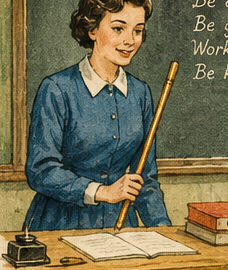
Miss Beatrice Blyton happened to pass their table.
She glanced at the diary before smiling.
“Researching the school’s history?”
“Yes, Miss.”
“A worthwhile subject,” she replied. “Highdon has changed a great deal over the years, even if it doesn’t always appear that way.”
Her words lingered in their minds.
That evening the four boys returned to the passage beneath the cedar tree.
This time they noticed something they had missed before.
One section of brickwork sounded hollow.
Working carefully, they discovered a narrow wooden door hidden behind shelves blackened with age.
Inside lay a small room.
It contained old house photographs, faded rugby caps, prize certificates and dozens of handwritten journals left by former pupils stretching back many decades.
Each generation had added its own memories.
Victories.
Friendships.
Favourite teachers.
Snowball fights.
Midnight feasts.
School plays.
One journal described Highdon during the early years of the century.
Another recorded life during wartime.
A third reflected on how education was changing as new ideas emerged.
Reading through them, the boys realised that every generation believed its own school days had been unique.
Yet the same themes appeared again and again.
Friendship.
Responsibility.
Growing up.
Courage.
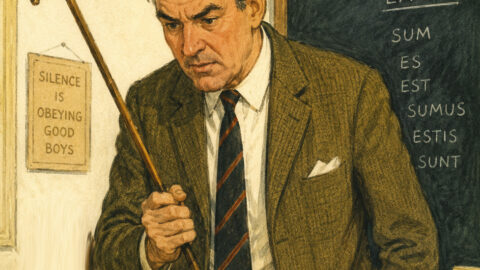
The school’s strict rules were mentioned too, reminding the boys that Highdon, like many boarding schools of the 1970s, still followed long-established traditions of discipline.
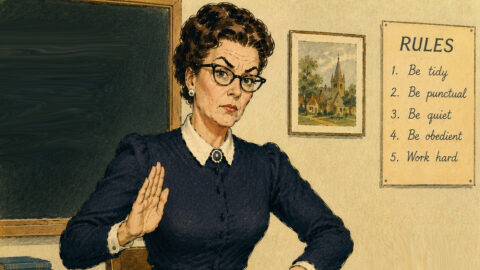
At the heart of that system stood the school’s formidable headmistress, Miss Bowflower.
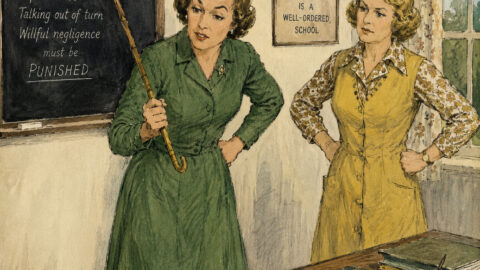
Tall, silver-haired and impeccably dressed, Miss Bowflower believed that discipline and kindness belonged together. She expected every boy to know the rules and to keep them. Most never found themselves in serious trouble, for a quiet word from her was often enough to restore order. But when repeated disobedience, bullying or deliberate dishonesty left her with little alternative, she did not hesitate to use the traditional punishments that Highdon had long maintained.
In the oak-panelled headmistress’s study rested two familiar implements: a well-polished school cane hanging inside a cupboard and a black rubber-soled carpet slipper kept neatly in a drawer of her desk. The slipper was generally reserved for lesser offences, while the cane was used only for the most serious breaches of school discipline. Every punishment was entered carefully into the punishment book, and Miss Bowflower insisted that no member of staff should ever administer either implement in anger or without proper justification.
Even so, the journals revealed that boys throughout the decades had remembered the sight of being summoned to the headmistress’s study with considerable apprehension. Many admitted that they feared disappointing Miss Bowflower far more than the punishment itself.
Andrew quietly closed one of the journals.
“It’s strange,” he said.
“I thought I’d remember the rules most.”
“What will you remember instead?” David asked.
Andrew smiled.
“The rugby matches.”
“The tunnel.”
“Mrs Bellamy helping everyone settle in.”
“Miss Blyton making books feel real.”
“And finding all of this.”
David nodded.
“I think that’s what Highdon really is.”
“Not just the buildings.”
“Not just the timetable.”
“The people.”
As the chapel bell echoed across the grounds, the boys carefully returned every journal to its shelf.
Some secrets, they decided, deserved to be preserved rather than disturbed.
When they emerged beneath the old cedar tree, the evening sky was glowing orange above the Sussex hills.
From a distant window, Miss Charlotte Ashcombe watched them with a knowing smile.
She had suspected they would eventually discover the hidden archive.
She also suspected they had learned the lesson its former pupils had hoped future generations would understand.
Schools were remembered not simply for their rules, but for the friendships they inspired, the challenges they presented and the character they helped to build.
Those were the memories that endured long after the final school bell had rung—even in a place as traditional as Highdon, where the steady guidance of teachers such as Miss Bowflower, Mrs Bellamy, Miss Blyton and Miss Ashcombe shaped generations of boys in ways that lasted far beyond their schooldays.