Senior boys at St Bartholomew’s could be appointed prefects. They wore a narrow strip of red braid on their blazers and were permitted to stand at the ends of lines, carry messages to the staff room and supervise the junior cloakroom.
Prefects were not allowed to use the cane or slipper. They could assign minor lines, report offenders and order boys to wait outside a teacher’s study.
The position brought privilege and danger.
A good prefect protected younger boys and prevented trouble. A bad prefect became a bully.
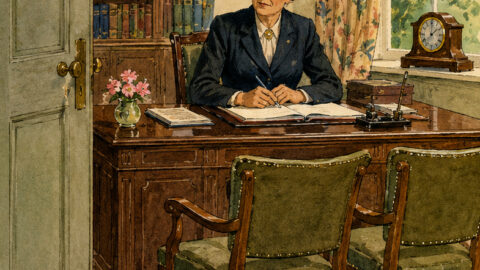
Miss Cartwright watched them carefully.
“Authority,” she told the prefects each term, “is not permission to indulge your temper. It is a duty to exercise restraint.”
The boys themselves maintained an unwritten code. It was acceptable to complain privately about a punishment. It was unacceptable to inform on a friend merely to avoid one.
A boy who endured the cane without betraying his companions earned considerable respect. A boy who allowed another to take the blame for him earned none.
There were constant small wars between boys and staff. Slippers disappeared from drawers. Canes were hidden behind radiators. Alarm clocks were placed beneath floorboards. Ink was added to the staff-room sugar bowl.
The victories were usually brief.
Mrs Bellamy’s missing slipper was once discovered hanging from the school weather vane. The responsible boys had climbed onto the roof after supper.
Miss Cartwright inspected the slipper, inspected the boys and said:
“You will spend Saturday returning every slate on the west roof to a condition of perfect cleanliness. Afterwards, I shall deal with the question of how you came to be there.”
The boys later agreed that cleaning the roof had been worse than the caning.