A disciplinary system is most defensible when the pupil understands that it is the behaviour being condemned rather than the child personally.
Corporal punishment could blur that distinction.
If a teacher appeared angry, enthusiastic or amused while administering punishment, a child might reasonably conclude that the event was no longer merely about enforcing a school rule.
It could feel personal.
Some recollections describe teachers as being particularly formidable with the cane or strap. Others remember teachers keeping several canes, displaying them prominently or becoming strongly associated with a particular instrument of punishment.
One former pupil remembered a teacher’s cane hanging beside the blackboard as a permanent warning.
Another recollection describes a headteacher keeping several canes in a cupboard, while the former pupil vividly remembered receiving additional strokes after laughing when the first punishment apparently failed to hurt sufficiently.
Whether such incidents were intended to reinforce discipline or authority, they could create an atmosphere in which the personality of the punishing teacher became almost as important as the school rule itself.
Children learned which teachers possessed the cane.
They learned which teachers were likely to use it.
They learned which teachers were considered particularly severe.
And they exchanged this information among themselves.
Thus reputations developed.
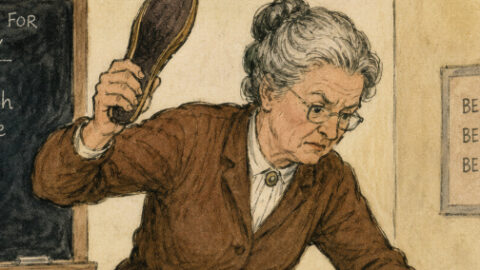
The teacher and the instrument sometimes became inseparable in school folklore: Miss So-and-so and her cane; Mrs So-and-so and her slipper; the games mistress and her plimsoll.
Decades afterwards, the association could remain.