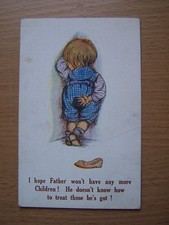
Whenever school corporal punishment is discussed, one question almost always emerges.
Did boys and girls experience it differently?
At first glance, the answer might appear obvious. Boys were generally punished more frequently than girls, particularly in schools where discipline was strict and physical punishment formed part of everyday life. Yet frequency alone tells us very little about how punishment was experienced or remembered.
The reality was far more complicated.
Former pupils often recall that boys expected to be punished. From an early age, many were taught that misbehaviour would have consequences. Whether at home or at school, they grew up believing that discipline was simply part of life.
Girls, however, were often perceived differently.
Some people believed girls were punished less often, treated more gently, or simply spoken to rather than physically disciplined. While this may have been true in certain schools, it certainly was not universal.
Many girls attended schools where the cane, slipper or strap was used just as readily as it was for boys.
Those who did often recall that teachers made little distinction between the sexes. If a rule was broken, punishment followed regardless of whether the pupil was male or female.
This has led to an interesting observation.
Some former pupils have claimed that seeing girls receive the cane challenged the traditional belief that women were somehow too delicate for such punishment. Others argued precisely the opposite, insisting that girls should never have been subjected to corporal punishment at all.
The discussion therefore becomes less about gender and more about changing social attitudes.
Another recurring theme concerns acceptance.
Some people who have spoken with former pupils over the years have formed the impression that many women openly admitted they deserved the punishments they received at school. Looking back decades later, they often described strict teachers as being firm but fair.
Others report entirely different experiences.
They recall conversations with women who still felt deeply resentful about having been caned. Some believed they had been punished unfairly. Others felt the punishment was excessive, even if they accepted they had broken the rules.
Neither viewpoint necessarily represents the majority.
They simply demonstrate how personal these memories remain.
One former pupil remembered a girl who was caned after arriving late to class, despite insisting the delay had been entirely beyond her control. Understandably, she believed the punishment was unfair and continued to resent it many years later.
Another recalled a girl punished for tracing over a name that had already been carved into a school desk. While she accepted that some punishment may have been justified, she felt the severity of the caning far exceeded the offence itself.
These examples reveal an important distinction.
People often confuse resentment towards corporal punishment with resentment towards injustice.
The two are not necessarily the same.
A pupil may dislike the cane because they believed they did nothing wrong. Equally, another pupil may accept the punishment because they honestly believed they deserved it.
In many cases, fairness mattered far more than the punishment itself.
Several former pupils reflected that they rarely felt punished unfairly. If anything, they believed they escaped punishment on many occasions when they could easily have been caught.
One woman remembered receiving the cane for truancy alongside another girl. The boys involved in the same offence received strokes across the seat of their trousers, while the girls received strokes across the hands.
At the time, she believed the boys had received the easier punishment because clothing provided some protection.
Only years later did she discover that this supposed advantage was largely imaginary.
Another former pupil recalled standing before a deputy head after a particularly embarrassing incident. The punishment announced seemed frighteningly severe, yet when it was finally administered, it proved less harsh than expected.
Looking back, she remembered trusting the deputy head’s judgement, even when she disagreed with the original decision.
Such memories suggest that confidence in the person delivering punishment could influence how it was remembered.
This raises another fascinating question.
Did boys and girls react differently because of their personalities, or because society expected them to behave differently?
Some observers believe boys were encouraged to endure hardship without complaint. They were expected to accept punishment, however unfair, as simply part of growing up.
Girls, they argue, were more likely to question whether something was fair or unfair.
Others reject this completely.
They point out that boys are just as capable of protesting, “It’s not fair,” while many girls quietly accepted punishment without complaint.
Perhaps the real difference lay not between boys and girls at all, but between individuals.
Every child arrived at school with a different upbringing, different expectations and a different understanding of authority.
Some accepted rules without question.
Others challenged them.
Some feared punishment intensely.
Others feared humiliation far more.
As the years passed and society gradually moved away from physical discipline, these individual memories became even more diverse.
Some people remember strict schools with surprising affection.
Others remember them with lingering resentment.
Neither memory can cancel out the other.
Together, they remind us that school corporal punishment was never experienced in quite the same way by any two pupils, regardless of whether they were boys or girls.