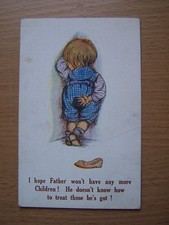
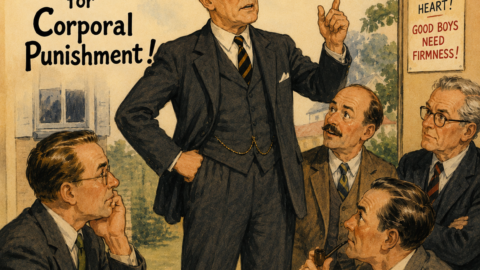
For generations, school corporal punishment was defended on the grounds that it served an important purpose. Whether delivered with the cane, the slipper, the strap or the paddle, its supporters believed that physical punishment discouraged children from repeating bad behaviour. The pain was intended to act as a powerful warning: break the rules today, and tomorrow’s punishment would remind you not to do so again.
On paper, the idea appears straightforward. In reality, however, the question is far more complicated.
Can pain truly deter behaviour?
It is surprisingly difficult to answer scientifically. Ethical considerations prevent researchers from carrying out controlled experiments involving children and physical punishment. Instead, we can only examine human behaviour and ask whether painful consequences generally prevent people from taking risks.
Cycling provides an interesting comparison.
Every cyclist understands the dangers involved. The worst possible outcome is catastrophic injury or even death. Serious accidents can leave someone paralysed for life, while less severe crashes often result in broken bones, deep cuts, road rash and months of recovery. Even experienced cyclists regularly suffer bruises, muscle strains, sore joints and countless minor injuries.
Yet millions continue cycling every day.
If the possibility of death itself cannot completely deter people from riding a bicycle, it becomes reasonable to question whether the prospect of six strokes of the cane or a slippering at school could ever have acted as an absolute deterrent.
Many former pupils openly admit that it did not.
Children rarely misbehaved because they wanted punishment. They simply believed they would avoid being caught. Once discovered, punishment became the price they paid for taking the risk.
For some youngsters, corporal punishment even became an unexpected badge of honour.
Among certain groups of boys especially, receiving the cane was viewed almost as a rite of passage. Enduring the punishment without crying demonstrated courage in the eyes of classmates. The punishment itself became secondary to proving personal toughness.
This curious attitude occasionally led to another assumption—that girls either escaped corporal punishment altogether or would somehow be unable to endure it.
History suggests otherwise.
Across Britain, many girls attended schools where the cane, slipper or strap formed part of the disciplinary system. Thousands experienced exactly the same punishments as boys. Far from proving weakness, many accepted their punishments with remarkable composure.
Some observers even argued that this quietly challenged outdated ideas about women being physically weaker than men.
Others pointed to an entirely different comparison.
Motherhood has often been described as one of life’s greatest rites of passage. Anyone who has witnessed childbirth understands the extraordinary physical endurance involved. Compared with that experience, even the most severe school caning would seem insignificant.
The comparison illustrates an important point.
Pain cannot easily be measured.
What feels unbearable to one person may seem relatively minor to another. Every individual experiences pain differently, shaped by personality, memory, emotion and circumstance.
One contributor recalled suffering a serious accident at around nine years of age. During rough play in the school playground, several children accidentally fell on top of them, breaking both bones in the forearm. The pain was immediate and overwhelming.
Hospital treatment brought little comfort.
After X-rays confirmed the break, doctors reset the fractured bones. There was little warning beyond a brief comment that it “might hurt a little.” The agony of that procedure remained unforgettable decades later.
Compared with such injuries, school punishment occupied a different category entirely.
This raises another interesting question.
When pupils knowingly broke school rules, were they, in a sense, choosing the possibility of punishment?
Some believe they were.
If a child fully understood that a particular offence would result in the cane or slipper, then the decision to commit the offence carried with it an acceptance—however reluctant—of the likely consequences.
Others reject this argument completely.
They point out that while the decision to misbehave may have been voluntary, the pain itself was not. Corporal punishment remained something imposed by another person in authority, making it fundamentally different from voluntarily accepting risks in everyday life.
This distinction lies at the heart of the wider debate.
Was school corporal punishment primarily a deterrent, or was it simply a traditional method of enforcing discipline that continued because generations accepted it?
The answer, as with so many aspects of education, is unlikely to be simple.
It depends not only upon the punishment itself, but upon the individual receiving it—and the society in which it was regarded as normal.