The Power of a Respected Gentleman
In a close-knit community, challenging the headmaster could mean challenging the establishment itself.
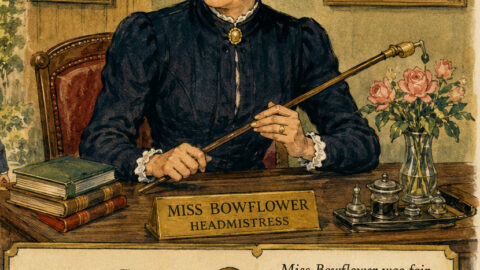
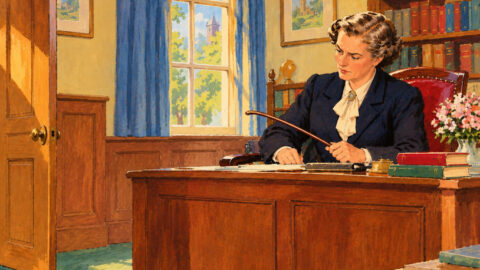
To understand why parents might have hesitated before pursuing a complaint, one must appreciate the position occupied by the grammar school headmaster in British society.
He was not merely another schoolteacher.
He was frequently regarded as a pillar of the community.
His responsibilities extended beyond the classroom.
He addressed assemblies, attended governors’ meetings, corresponded with parents and represented his school at public occasions.
In many towns, the headmaster was a familiar figure at civic functions and charitable events.
He might know local councillors, magistrates and other influential gentlemen.
His opinions on education were treated with respect.
And when he spoke about discipline, people listened.
The headmaster at the centre of this particular recollection was said to have been a Freemason.
That fact subsequently led one former pupil to question whether a complaint against him would necessarily have been considered impartially.
Such suspicions reflected a broader anxiety about the influence of personal connections within local institutions.
They did not, however, establish that any improper influence had actually occurred.
There is no evidence in the account that police officers were approached, that a complaint was suppressed or that Freemasonry played any role in the incident.
Nevertheless, the concern illustrates the difficulties which an ordinary family might have imagined when contemplating a challenge to a prominent headmaster.
The schoolmaster possessed authority.
The parents possessed comparatively little institutional influence.
And the boy possessed even less.
A pupil who complained might find himself confronted by adults who regarded the school’s reputation as more important than his grievance.
The possibility of such an imbalance troubled critics of the system.
They argued that a headmaster who had acted improperly should not be protected simply because he was respected.
Indeed, the greater his authority, the greater his responsibility to exercise it properly.
Others took a different view.
They believed that discipline depended upon maintaining the authority of teachers.
If every punishment could be challenged by dissatisfied parents, schoolmasters might become reluctant to enforce the rules.
The result, they feared, would be disorder.
These opposing attitudes were characteristic of a period in which British education was beginning to change.
By the 1970s, traditional assumptions about authority were increasingly being questioned.
The rigid hierarchy of the old grammar school was no longer universally admired.
Parents were becoming more willing to challenge decisions made by educational authorities.
And younger teachers were beginning to question whether physical punishment was necessary at all.
Yet the older generation remained influential.
For many of its members, the cane represented discipline, responsibility and the maintenance of standards.
For others, it represented an outdated system in which adult authority could too easily become intimidation.
The case of the injured grammar school pupil lay precisely at the meeting point of those two worlds.
It was not simply a question of whether one headmaster had acted too harshly.
It was a question of how much unquestioned power any headmaster ought to possess.