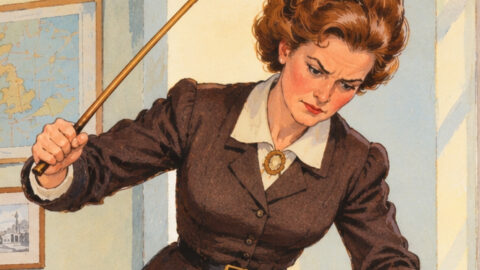
In the grammar schools of post-war Britain, the headmaster’s word was frequently regarded as law. The cane remained a familiar instrument of discipline, and few parents questioned the authority of the man entrusted with their son’s education. But what happened when punishment went too far? Could a headmaster be brought before the courts for injuries inflicted upon a pupil? And who would dare challenge him?
The following feature is a period-style reconstruction based on a former grammar school pupil’s recollections and a subsequent debate about school discipline. Some scenes and dialogue have been imaginatively developed. The central allegation remains unverified.
A Grammar School in the Early Sixties
When obedience was expected, punishment was accepted, and the headmaster was seldom questioned.
There was a time, not so very long ago, when the British grammar school was an institution in which discipline was considered every bit as important as Latin, mathematics or the correct use of the English language.
The school bell rang, the boys formed their lines, and the masters took their places before the blackboards. Shirts were expected to be properly tucked in, ties correctly knotted and shoes polished. A boy who neglected these elementary requirements might soon find himself standing outside the headmaster’s study.
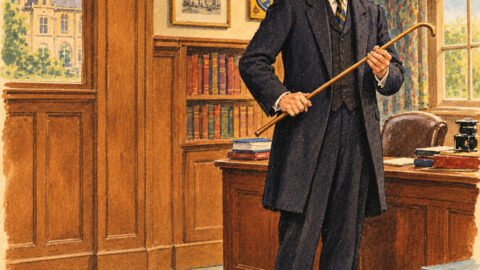
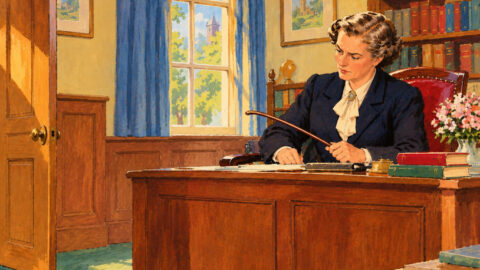
And there, behind a formidable wooden desk, sat a man whose authority was rarely questioned.
One former pupil, who attended a strict boys’ grammar school between 1965 and 1973, recalls a headmaster who had occupied his position since 1958 and would remain there until 1978.
He was, by all accounts, a formidable character.
Hot-tempered, impatient and possessed of a disposition which could turn from calm to furious with remarkable speed, he had earned a reputation among generations of boys for his uncompromising approach to discipline.
By September 1965, when our former pupil arrived at the school, the headmaster had apparently mellowed somewhat.
That, at least, was the opinion of those who remembered his earlier years.
For the younger boys, however, even a mellowed headmaster was quite sufficient to inspire obedience.
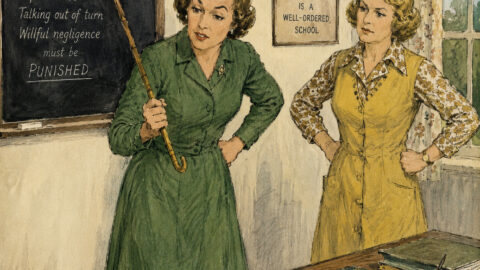
In those days the cane was no unusual sight in British schools. Some headmasters kept one in a cupboard, others in a desk drawer. A few made little secret of its presence, regarding it as a necessary reminder of the consequences of misconduct.
A boy summoned to the headmaster’s study might be required to explain himself, receive a stern lecture, or, if his offence was considered sufficiently serious, submit to corporal punishment.
The exact arrangements differed from school to school.
Some establishments maintained punishment books, recording the name of the offender, the offence committed and the number of strokes administered. Elsewhere, much depended upon the personal judgement of the master concerned.
And that was precisely where difficulties could arise.
For although the law permitted corporal punishment in schools, it did not grant teachers unlimited authority to inflict injuries.
There was supposed to be a distinction between reasonable correction and excessive violence.
But who decided where that distinction lay?
The headmaster?
The parents?
Or the courts?
In the early 1960s, many families would have hesitated before challenging a schoolmaster, particularly one occupying such an influential position within the local community.
The headmaster was often a respected gentleman, known to governors, magistrates, businessmen and other figures of authority.
His word carried considerable weight.
A schoolboy’s complaint, on the other hand, might be dismissed as exaggeration.
After all, boys were boys, and punishment was regarded by many as part of growing up.
Yet occasionally an incident occurred which caused even the most determined supporters of school discipline to question whether matters had gone too far.
One such incident, allegedly occurring at this particular grammar school in 1962, would remain in the memory of a young boy who had not even witnessed it.
And more than a decade later, the questions surrounding it would remain troubling.