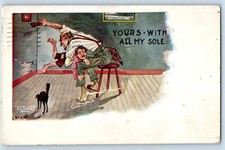
Across much of small-town America during the 1970s, discipline was often measured not by detention slips or after-school meetings, but by a polished wooden paddle hanging in plain view of the classroom. In many districts—particularly throughout parts of the South and Midwest—it was considered as ordinary a classroom fixture as the chalkboard or the American flag.
For countless students, the possibility of a paddling was simply part of school life. Some schools reported its use only occasionally, while others relied on it with remarkable regularity. It was not uncommon for the sharp crack of a paddle echoing down a hallway to remind everyone that school rules were expected to be taken seriously.
In many communities, local school boards supported corporal punishment as an accepted disciplinary measure. Teachers and principals were often expected to keep a paddle readily available and to use it when they believed the circumstances warranted. Standards varied from one district to another, but the philosophy remained much the same: swift discipline was thought to discourage repeated misbehavior.
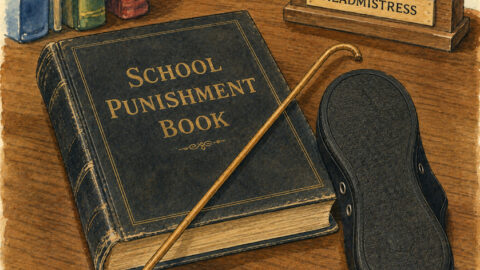
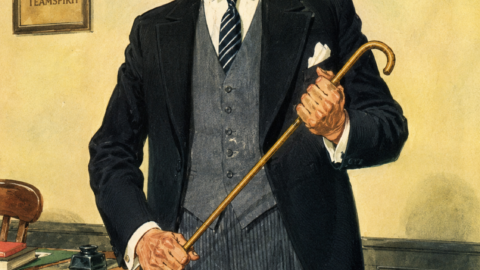
Veteran educators often had their own preferred paddle. Some were broad and compact, while others were longer with sturdy handles that reflected years of steady use. Principals were frequently said to possess the largest paddles in the building, reinforcing both their authority and their reputation. Stories about these well-worn instruments became part of school folklore, passed from one class to the next with equal measures of exaggeration and respect.
Students, naturally, developed their own legends as well. There were tales of strict teachers whose mere glance could quiet a noisy classroom, and principals whose office inspired silence long before anyone crossed the threshold. A few adventurous youngsters tested the limits of authority, but many learned that challenging school rules often brought consequences they would rather have avoided.
Although practices differed widely, corporal punishment remained far from universal. Some schools seldom used it, while others regarded it as an essential part of maintaining order. Attitudes also varied by region, reflecting local traditions and community expectations.
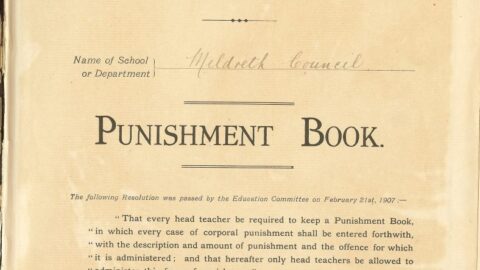
Across the Atlantic, Britain followed a somewhat different path. While corporal punishment was also practiced in many British schools during parts of the twentieth century, its methods, customs, and administration differed considerably from those found in American classrooms. Historical accounts indicate that disciplinary practices varied between schools, and over time the use of corporal punishment declined before being phased out through legal and educational reforms.
Today, the image of the classroom paddle has largely passed into history. What was once considered a routine disciplinary tool is now viewed through a different lens, reflecting changing ideas about education, child development, and effective classroom management. Whether remembered with approval, criticism, or simple curiosity, the paddle remains a symbol of an era when school discipline followed a very different set of expectations.