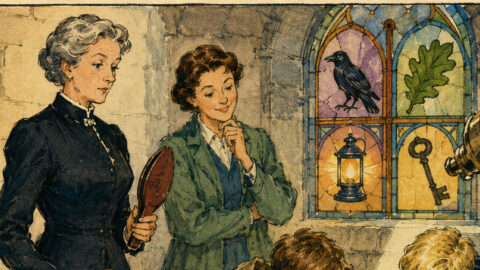
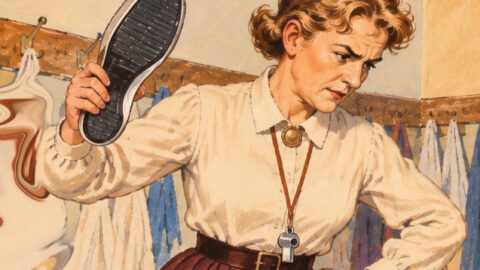
There was a time when corporal punishment occupied a very different place in everyday life.
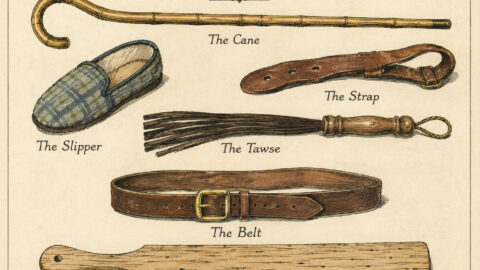
To modern eyes, it can be difficult to understand just how casually physical punishment was once discussed. It appeared in newspapers, magazines, advertisements, films, cartoons and comedy. At home, a child might be threatened with a spanking or the hairbrush. At school, pupils could face the ruler, slipper, strap, tawse, paddle or cane.
None of these things were particularly hidden.
Indeed, the remarkable thing is not simply that corporal punishment existed, but how ordinary it was considered to be.
Looking through newspapers and magazines from the 1930s and 1940s reveals a world with very different attitudes. Pictures and jokes involving spanking could appear in mainstream publications without automatically being regarded as shocking. Advertisers sometimes even used the subject humorously to sell completely unrelated products.
Hollywood followed much the same pattern.
A spanking scene might appear in a romantic comedy and be presented as slapstick rather than violence. Audiences were expected to laugh, and for the most part they apparently did. The cultural meaning attached to such scenes was very different from the meaning many people would attach to them today.
This raises an interesting question.
When did attitudes begin to change?
There was no single morning when society woke up and collectively decided that the old ways had become unacceptable. Instead, attitudes changed slowly. What one generation regarded as perfectly normal could make the next generation uncomfortable, while practices that had survived for decades gradually began to attract questions.
School corporal punishment followed a similar journey.
For generations, teachers had been permitted considerable authority over the children in their care. Punishment was intended to hurt. That was the point. There was little reason to threaten a pupil with the cane if the pupil believed it would be painless.
There was also a psychological element.
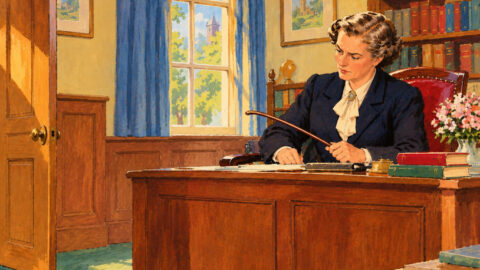
The sight of a cane in a headteacher’s study, the ruler lying on a teacher’s desk or the gym shoe being produced during a lesson could sometimes achieve what the punishment itself was intended to accomplish. Children knew what those objects represented.
The slipper became particularly associated with British schools. Despite its name, it was generally not a soft household slipper at all, but a rubber-soled gym shoe or plimsoll. Pupils might call exactly the same object a “gym shoe” when wearing it and “the slipper” when it was being used for punishment.
At some schools it was an everyday classroom punishment. One recollection describes pupils being punished over a desk at the front of the classroom, while at grammar school the gym shoe could still be used on pupils well into their teenage years.
The cane carried a different reputation. The tawse became particularly associated with Scotland, while other countries and regions developed their own traditional implements.
What united them was a simple idea:
Adults were in authority, children were expected to obey, and physical punishment was considered by many to be a legitimate means of enforcing that authority.
Yet even during the supposed golden age of corporal punishment, not everybody was comfortable with it.
Some teachers disliked using it. Some parents objected. Some pupils accepted it as an unpleasant but ordinary part of school life, while others remembered the humiliation far longer than the physical pain.
That is important, because history is rarely as simple as saying, “Everyone accepted it then.”
They didn’t.
What changed was the balance.
As the twentieth century progressed, the voices questioning corporal punishment became louder.
And slowly, almost imperceptibly at first, the cane and slipper began their journey towards the classroom door.