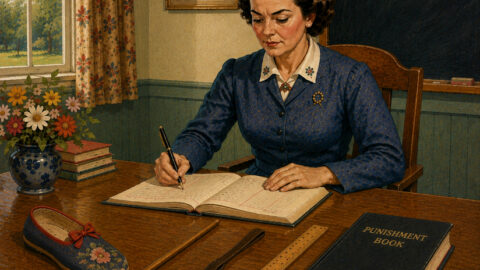
Another former pupil recalled coming across an internet discussion in which people were reminiscing about an unusual teacher from their schooldays.
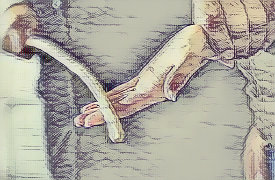
Like the PE master with his miniature cricket bat, this teacher was said to have kept a small bat specifically for disciplining troublesome boys.
There was, however, an extraordinary additional claim.
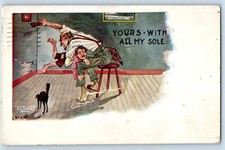
According to the story, the teacher sometimes selected a girl from the mixed class and instructed her to administer the punishment.
That recollection was greeted with considerable scepticism by another contributor.
He simply could not imagine any teacher at his own school handing responsibility for corporal punishment to a pupil, particularly a girl being asked to punish a male classmate.
The girls at his school, he said, were quite content to remain spectators.
That, in itself, could be embarrassing enough.
At many mixed schools during the 1960s and 1970s, corporal punishment was overwhelmingly administered to boys. Consequently, a boy might find himself being punished in front of female classmates who knew perfectly well that they were unlikely to receive the same treatment.
Some teachers also seemed to make something of a ceremony out of punishment.
Former pupils recall boys being told to touch their toes, bend across the back of a chair or lean over the teacher’s desk.
Occasionally the classroom furniture itself became part of the performance.
One recollection involved a teacher asking a girl to stand up from her desk so that the boy being punished could bend across it. The unfortunate pupil was then positioned in full view of the class.
Instructions to “bend over further” were also remembered.
Looking back half a century later, it can seem astonishing that such scenes were once accepted as an ordinary part of school life.
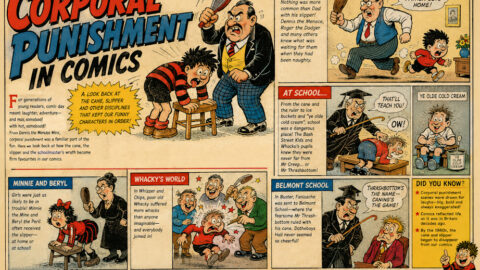
Yet corporal punishment occupied a peculiar position in British education.
There were official rules, but there were also local traditions. One school might use the cane formally in the headmaster’s study. Another relied mainly upon the slipper. Scottish pupils might encounter the tawse. PE teachers sometimes favoured whatever happened to be conveniently available in the gymnasium.
And occasionally, according to former pupils, that meant a small cricket bat.
These recollections should not be taken as evidence that cricket bats were widely used in British schools. They plainly were not. The cane, slipper and strap appear far more frequently in school memories.
Nor should every story repeated decades later automatically be regarded as completely accurate. Memories change, details become blurred and school legends have a remarkable ability to survive.
Nevertheless, when similar recollections emerge independently from different schools and different decades, they provide an intriguing glimpse into the enormous variety of disciplinary practices once found in British education.
Which brings us back to Tom Davis.
More than a century before these schoolboys encountered miniature cricket bats in their gymnasiums, an unhappy Nottinghamshire cricketer supposedly asked a teammate to punish him for dropping a catch.
Cricket and corporal punishment may seem unlikely companions.
Yet British history, it seems, occasionally found room for both.
And one suspects that the next time some of us see a miniature autograph bat in a cricket-ground souvenir shop, we may look at it rather differently.