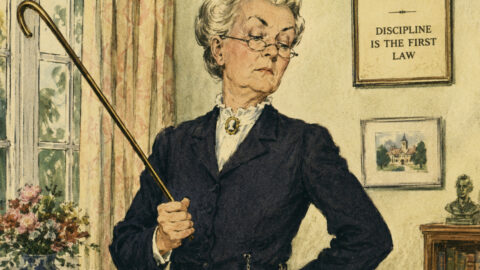
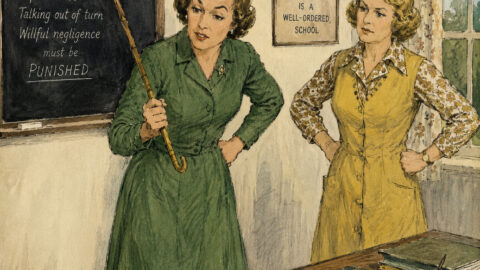
Every boarding school possessed two systems of government.
One appeared in the prospectus.
The other lived in the corridors.
On paper, authority rested firmly with the headmaster, his deputies and the teaching staff. Rules were neatly printed in school handbooks. Expectations were clearly defined. Punishments were listed with reassuring precision.
Yet every new boy soon discovered there existed another hierarchy, one that no handbook fully explained.
The prefects.
To the outside world they were senior pupils entrusted with responsibility. To younger boys they could seem like ambassadors from another world—older, more confident and apparently immune from the anxieties of school life.
Their privileges were obvious.
They occupied better studies.
They enjoyed greater freedom.
Some wore distinctive ties or badges of office.
When they entered a room, conversations often fell silent.
The position was rarely won through popularity alone.
Academic achievement counted.
Sporting success carried weight.
Character mattered just as much.
Housemasters searched for boys capable of setting an example rather than merely enforcing rules.
Most took the responsibility seriously.
A few discovered that authority could become an intoxicating companion.
The boarding house changed noticeably after evening roll call.
Masters retired to studies or family quarters.
Prefects supervised preparation.
Rows of desks filled with boys completing Latin translations, algebra problems and history essays.
The scratching of fountain pens echoed through the room.
Occasionally someone whispered.
A prefect looked up.
Silence returned immediately.
There were no raised voices.
Experience had taught everyone that order could be restored with little more than a glance.
Preparation, universally shortened to “prep,” became one of the defining rituals of boarding life.
Two uninterrupted hours.
No excuses.
No distractions.
Homework first.
Everything else afterwards.
Many former pupils would later admit those evenings taught habits that served them throughout university and professional life.
Others remembered only the endless clock-watching.
Outside the classroom, life possessed a lighter side.
Dormitories developed personalities of their own.
One room became known for practical jokes.
Another produced the school’s strongest rugby forwards.
Elsewhere lived musicians, chess enthusiasts and aspiring actors whose ambitions stretched far beyond the playing fields.
Friendships ignored house boundaries whenever opportunity allowed.
Boys swapped books, records and stories from home.
Birthdays were celebrated with whatever ingenuity limited resources allowed.
A cake from home became a feast for twenty.
A wireless hidden in a cupboard attracted an eager audience when important football results were broadcast.
Shared experience created friendships remarkably resistant to time.
Decades later, old classmates might struggle to remember examination marks.
They seldom forgot the names of those who occupied neighbouring beds.
Tradition, however, remained impossible to escape.
Every school possessed its legends.
Stories circulated of heroic captains, brilliant scholars and distinguished old boys who had gone on to become judges, explorers, bishops, diplomats or Members of Parliament.
Portraits lining assembly halls reminded each generation that others had walked the same corridors before them.
Success carried an obligation.
“You represent the school.”
The phrase appeared repeatedly.
On sports fields.
During concerts.
While travelling by train.
Even during holidays.
The school expected its reputation to accompany every pupil wherever he went.
By the early 1970s, society beyond the school gates was changing at remarkable speed.
Television brought the wider world into every home.
Universities questioned old assumptions.
Newspapers debated education with increasing enthusiasm.
Young people expected explanations where previous generations had accepted instructions.
These conversations inevitably reached the boarding schools.
Masters noticed subtle differences.
Questions became more frequent.
Rules attracted discussion rather than automatic acceptance.
Some teachers welcomed the change.
Others regarded it with considerable suspicion.
They worried that discipline, once weakened, would prove difficult to rebuild.
Among the pupils themselves, opinions differed just as widely.
Some admired strict masters whose expectations never varied.
Others flourished under teachers who encouraged debate and independent thought.
Increasingly, schools attempted to combine both approaches.
Firm standards remained.
But explanation began replacing simple command.
House meetings allowed boys to raise concerns.
Suggestion boxes appeared in unexpected places.
Student magazines printed opinions that might once have remained unspoken.
None of this resembled revolution.
Instead, change arrived quietly, one conversation at a time.
Perhaps the greatest transformation occurred in the relationship between masters and boys.
Older generations often described an unmistakable distance.
Teachers taught.
Pupils obeyed.
Personal matters remained private.
During the seventies, many younger masters adopted a different approach.
They coached teams.
Directed school plays.
Organised hiking expeditions.
Shared interests outside formal lessons.
Respect increasingly grew from familiarity as well as authority.
The best teachers discovered that discipline and kindness could exist together.
Indeed, each often strengthened the other.
As another school year unfolded, the familiar rhythm continued.
Autumn leaves gathered beneath ancient trees.
Winter frost whitened the playing fields.
Spring brought cricket practice and examination timetables.
Summer promised Speech Day, prize-giving and the departure of another generation.
The buildings appeared unchanged.
The traditions continued.
Yet beneath the surface, boarding schools across England were becoming different places.
Not because they abandoned excellence.
But because they were slowly redefining what excellence meant.
Achievement would always matter.
So would character.
Increasingly, educators began to believe that confidence, curiosity and mutual respect deserved a place alongside discipline and tradition.
The old schools had weathered wars, economic hardship and social upheaval.
Now they faced a quieter challenge—the task of preserving their heritage while preparing boys for a society very different from the one that had shaped their founders.
The answer would not be found in a rulebook.
It would emerge, year by year, through the lives of the boys who passed beneath those chapel towers and eventually carried their lessons into the wider world.