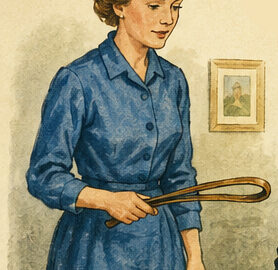
What perhaps stands out most strongly today is how ordinary the whole business once seemed.
Pupils knew which teachers used the cane or slipper. They knew where punishments took place. They knew which offences were likely to result in them. They knew who had been punished and usually discovered approximately why.
There were even informal rules about how pupils were expected to behave afterwards.
Do not cry if you could possibly help it.
Do not boast too much.
Do not ask too many questions.
And, above all, if you were going to acquire a reputation as a school rebel, make certain you did not get caught so frequently that everybody simply concluded you were hopeless.
Girls were no more united in their opinions than boys.
Some admired the rebels. Some sympathised with them. Some laughed at them. Some disapproved.
And a great many probably had far more interesting things to think about.
Perhaps that is the real answer to the question.
Getting the cane might briefly make a boy the centre of attention — but whether it made him a hero, a fool or simply that unfortunate boy who had been sent to the head depended entirely upon who was watching.