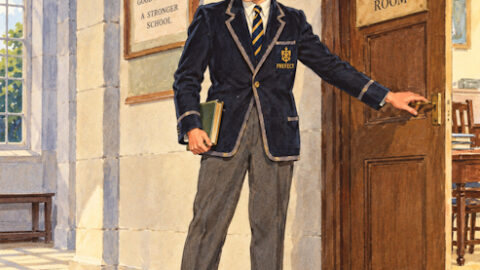
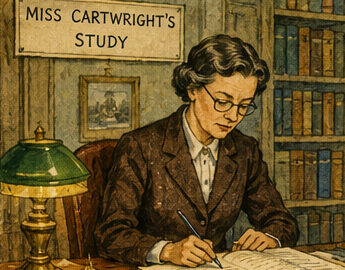
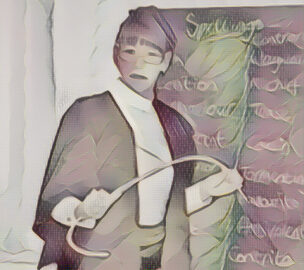
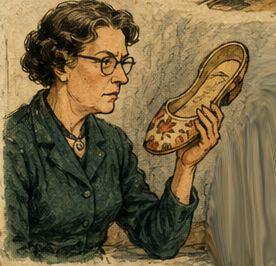
Miss Agatha Cartwright had been headmistress since 1948. She was a tall, silver-haired woman who wore dark gowns, sensible shoes and a small silver cross at her throat. She was known among the boys as “The General”, though never within the hearing of a prefect.
She possessed a dry sense of humour and could be unexpectedly kind to a homesick new boy. On Sunday evenings, she sometimes read aloud from Dickens or Kipling in the common room. Yet no boy mistook her kindness for weakness.
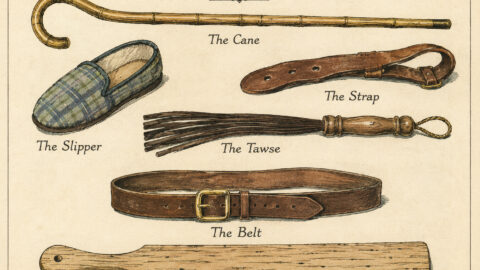
Miss Cartwright conducted morning assembly from a raised platform beneath the school crest. Beside the lectern stood a straight-backed chair and, upon certain mornings, a polished malacca cane.
Minor offences were dealt with privately. Serious offences were announced before the school.
One former pupil recalled:
“You knew something dreadful was coming when Miss Cartwright removed her spectacles, folded them carefully and placed them beside the hymn book. She never shouted. That made it worse. She would say, ‘The following boys will remain behind,’ and your stomach seemed to drop straight through the floor.”
She believed that punishment must be calm, deliberate and proportionate. No teacher was permitted to strike a boy in anger. The cane was administered only after the offence had been explained and the culprit given an opportunity to speak.
Nevertheless, Miss Cartwright’s punishments were feared.
Four strokes were considered severe. Six were reserved for bullying, dishonesty or repeated defiance. The punishment was generally delivered in her study with another teacher present, though boys waiting outside could hear enough to understand what was taking place.
Afterwards, the offender was expected to compose himself, straighten his uniform and return to lessons without fuss.
“Self-command,” Miss Cartwright would say, “is the beginning of manhood.”