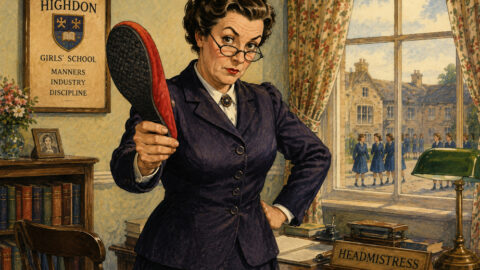
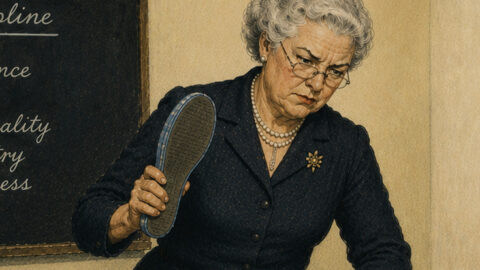
Perhaps more surprising to younger readers is that the slipper was not exclusively associated with schools.
A number of adults remembering their childhood say that slippers were also used for discipline at home.
Usually this meant an ordinary household slipper rather than the gym shoe associated with school.
One person remembered being disciplined by his mother with her bedroom slipper when he was young and later wondering whether anybody else’s parents had done the same.
The answer, judging from other recollections, is certainly yes.
Some remembered mothers using slippers; others remembered fathers doing so. Friends occasionally compared experiences, just as children compared school punishments.
In some households, being punished at school did not necessarily mean that the matter was finished.
Parents could be informed, and another punishment might follow at home.
This reflected a very different relationship between parents and schools from the one familiar today.
Teachers were frequently regarded as authority figures whose decisions should be supported rather than questioned. If a child arrived home complaining about being punished, the first parental question might not have been, “What did the teacher do?”
It was more likely to be:
“What did you do?”
For children growing up in such households, authority could therefore appear remarkably united.
School rules and family rules were different, but the expectation behind them was often much the same: adults made the rules and children were expected to obey them.