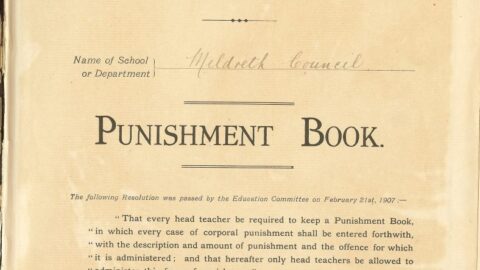
One particularly touching recollection comes from a former pupil whose father was a schoolteacher.
His father did occasionally use the cane, although he disliked having to do so. Usually, it came only after a verbal warning had been given and the pupil continued to misbehave.
The distinction is worth making.
This was not a teacher wandering around looking for excuses to punish children. The cane was regarded as an unpleasant part of the job — something to be used reluctantly when other methods had failed.
Years later, among a pile of his old papers, his son discovered a handwritten letter.
It appears to date from the early 1950s and was signed by no fewer than thirty-two boys.
The letter thanked the teacher for his patience and perseverance throughout the school year. His lessons, the boys wrote, had been a source of pleasure, although they jokingly referred to the cane as the one cloud on an otherwise happy year.
It is an extraordinary little document.
Imagine receiving such a letter today from a class of thirty-two children. The remarkable thing is not that the boys mentioned the cane. It is that they clearly felt genuine affection for the man who occasionally wielded it.
And that tells us something.
The teacher was remembered because of his teaching.
His former pupils evidently believed that he cared about them. They remembered his patience. They remembered his lessons. They remembered what he had taught them.
The cane was simply one part — and perhaps an unfortunate part — of the educational world in which they grew up.
When the teacher died, former pupils came forward with cherished memories of him. Among them was a well-known historian, who wrote a newspaper tribute.
He described the teacher as formidable in appearance, outwardly severe, but extraordinarily knowledgeable and wonderfully indulgent of the chatterbox pupils in his classroom.
Most importantly, he could bring out their enthusiasm.
He was the teacher who first inspired that particular pupil’s lifelong love of history.
That is surely where genuine respect comes from.
A child may remember being punished.
But what stays with us decades later is the person who encouraged us, challenged us, believed in us and opened our eyes to something we had never noticed before.
The old teacher may have carried a cane.
But it was his knowledge, character and enthusiasm that made him memorable.
The punishment was incidental.
The teaching was everything.