When people look back at childhood, they often remember the atmosphere of an era as much as the details of their own lives.
For those who attended school in the years following the war, corporal punishment was simply part of the landscape.
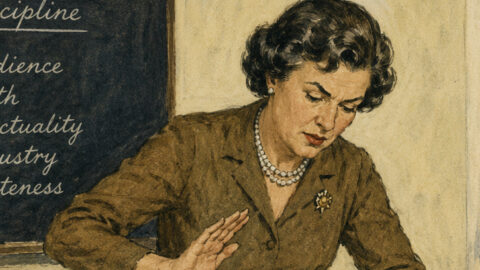
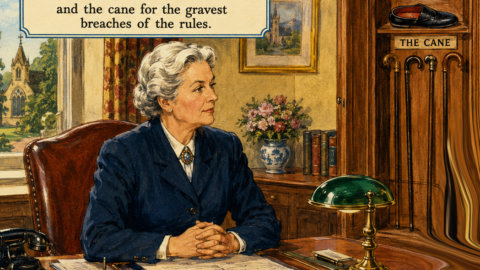
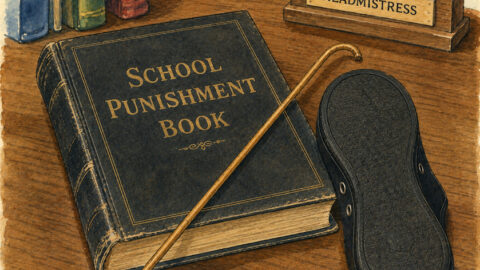
There were uniforms, school dinners, morning assemblies, prefects, house points, detention, lines — and, in many schools, the cane.
It was one of those avoidable pitfalls of life.
You knew about it.
You tried not to encounter it.
And if you did, you got through it and carried on.
Perhaps this is why some people today look back without bitterness.
But accepting something as normal does not necessarily prove that it was beneficial.
Children accept the world they are given.
They do not have the luxury of comparing it with every alternative.
If everybody around you regards something as ordinary, you are hardly likely to spend your schooldays questioning whether it is an appropriate way to treat children.
The more interesting question is what remains when the threat of punishment is removed.
Did those old schoolchildren become polite, considerate adults because they had been caned?
There is very little evidence in these memories to suggest that they did.
Instead, the people who are remembered with affection are the teachers who inspired their pupils.
The history teacher who made a complicated subject fascinating.
The stern-looking master who nevertheless adored children.
The teacher who recognised a pupil’s enthusiasm and encouraged it.
The father whose former pupils remembered his patience decades later.
Those are the stories that survive.
Not the number of strokes delivered.
Not the severity of the cane.
Not the fear produced in a classroom.
The lasting impression is made by the human being.
And perhaps that gives us the simplest answer to the original question.
Does hitting children teach them to respect authority?
It can certainly teach them that authority has the power to hurt them.
It can teach them to avoid certain behaviour.
It can make a classroom quieter.
But respect is something else.
Respect is earned.
It grows when a child discovers that the adult in charge is fair, knowledgeable, dependable and genuinely interested in his or her welfare.
Fear may make a child obey.
But affection, admiration and trust are what make a child respect.
And surely, when we look back on our schooldays, it is those qualities that we most hope our teachers possessed.
The cane may have been remembered.
But the teacher is what mattered.