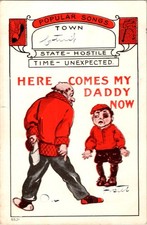
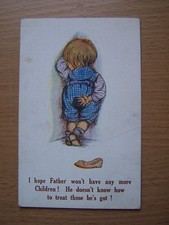
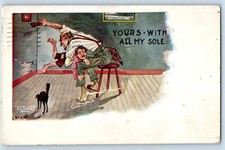
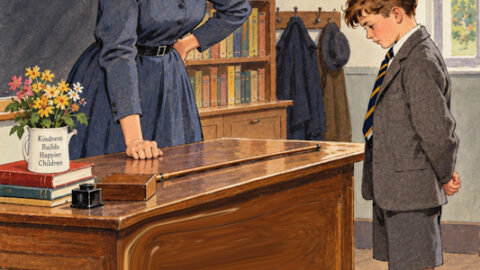
There is an argument one comes across again and again when the subject of corporal punishment is discussed: that being smacked, caned or otherwise physically punished taught children to respect authority — their parents, their teachers and, perhaps, authority in general.
I must confess that I have never found this argument particularly convincing.
If someone were to strike me, I cannot imagine that I would suddenly think more highly of them. Quite the reverse. I should almost certainly lose whatever respect I had for them. Indeed, I think I would regard anyone who deliberately struck me with a mixture of contempt, resentment and, eventually, loathing.
So I find myself wondering: how exactly does hitting somebody make that person respect you?
It is perfectly understandable that a child threatened with a beating should become frightened. Fear is an entirely natural response when somebody has the power to hurt you. If a boy knew that breaking a particular school rule might result in the cane, he would have every reason to think twice before breaking it.
But fear and respect are not necessarily the same thing.
A child might obey because he does not wish to be hurt. That does not automatically mean that he admires the person holding the cane, nor that he has developed a greater respect for authority.
And this distinction seems particularly important when we look back at the schools of the post-war years.
One former pupil remembers respecting most of his teachers enormously. Yet, interestingly enough, he says that corporal punishment had nothing whatsoever to do with it. He respected them because he considered them good people who were trying to do their best for their pupils.
There was, however, one notable exception — the deputy headmaster.
He was described as a bombastic sort of man who appeared to use the cane almost at random. The boys feared him, certainly. They avoided him whenever possible. But did they respect him?
Apparently not.
In fact, those boys who received the cane most frequently seemed to have the least respect for authority.
This raises an awkward question. Perhaps what we sometimes remember as “respect” was actually something rather different: obedience.
There is nothing particularly mysterious about obedience when there is a painful consequence attached to disobedience. A child does not have to believe that an authority figure is wise, fair or admirable. He merely has to understand that there will be an unpleasant price to pay if he crosses the line.
That may produce a well-controlled classroom.
But does it produce a respectful human being?
That is another question entirely.