Playing mothers and fathers was another great favourite among neighbourhood children.
The arrangements were usually settled with remarkable speed.
One child became Mother, another Father, and the remaining participants were assigned the roles of children, babies, neighbours or occasionally an interfering grandmother.
The youngest member of the company was frequently obliged to play the baby, whether or not this was a role he or she particularly wanted.
A corner of the garden became the kitchen. An old blanket represented a bed, a cardboard box served as the baby’s cot, and an assortment of chipped cups and saucers provided everything necessary for afternoon tea.
Naturally, the imaginary household required rules.
Children were instructed to wash their hands, finish their dinners, tidy their bedrooms and behave themselves when visitors arrived.
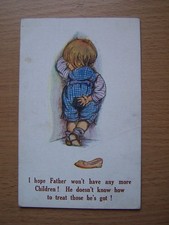
Failure to obey could result in being sent to bed, standing in the corner or being threatened with a smacked bottom.
One particularly amusing recollection concerns a game in which the child playing Mother disciplined the naughty baby. Father then announced that Mother herself deserved punishment because she had been wrong to smack the baby.
The logic was wonderfully circular, but entirely in keeping with the complicated moral reasoning of childhood.
These games reveal how children absorbed the domestic attitudes of their time.
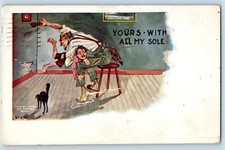
In many British households, particularly during the earlier decades of the twentieth century, the slipper was associated not only with school discipline but with parental authority.
An old carpet slipper left beside Father’s chair could therefore become a familiar prop in a game of mothers and fathers.
Children copied the stern voices they had heard at home.
“Just you wait until your father comes home!”
Or perhaps:
“Another word from you, young lady, and it will be straight upstairs!”
The threats were often delivered with such exaggerated seriousness that the entire company dissolved into laughter.
Yet the recollections also include occasions when children went beyond pretending and actually smacked one another. Such incidents should not be romanticised, particularly when younger children were expected to submit to the decisions of older ones.
What makes these games historically interesting is not the punishment itself, but the window they provide into the family life of the period.
Children were acting out the world they knew.
They imitated the division of household responsibilities, the language of parental authority and the familiar rituals of discipline.
In their little make-believe homes, they reproduced both the warmth and the contradictions of the adult world.