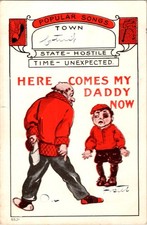
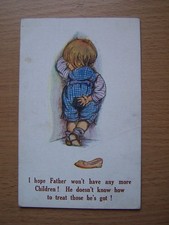
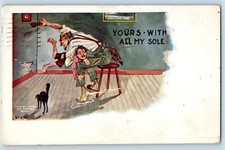
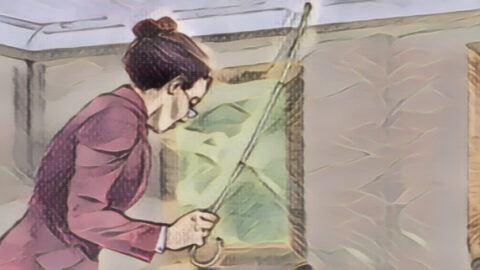
To understand why children incorporated the slipper and cane into their games, we must remember how familiar corporal punishment once was in British schools.
During the 1940s, 1950s and 1960s, many pupils encountered schools where physical punishment remained an accepted disciplinary measure.
Practices varied considerably.
Some schools relied upon the cane, others used the slipper, and some teachers administered smacks upon the hand or imposed more conventional penalties such as lines, detention and loss of privileges.
In certain schools, corporal punishment was relatively uncommon. In others, it formed a more conspicuous part of everyday discipline.
Children naturally talked about these experiences.
A boy who had received the cane might describe the incident to his friends, while another who had escaped punishment might listen with a mixture of curiosity, apprehension and relief.
Such stories inevitably influenced playground games.
The cane possessed a particular reputation. It was associated with the headmaster’s study, serious misbehaviour and the solemn announcement that a pupil was to receive six of the best.
Children sometimes reproduced this atmosphere in their imaginary classrooms.
A garden cane became a headmaster’s pointer. A twig represented the dreaded school cane. A wooden box served as the desk behind which the teacher sat in judgement.
The slipper, by contrast, was more readily available.
It could be found in almost every household, and its very familiarity made it a natural addition to games of school.
Some children apparently regarded the slipper as the punishment for lesser offences, reserving the imaginary cane for more serious transgressions.
Others used the two interchangeably, without any particular regard for actual school regulations.
These distinctions were part of the children’s invented world rather than a reliable reflection of universal school practice.
The source recollections also show how attitudes differed among children themselves.
Some remembered their games affectionately, while others described incidents that were uncomfortable or genuinely painful.
A number of accounts include conduct that, viewed from an adult perspective, involved inappropriate touching, coercion or breaches of personal boundaries.
Such experiences should not be excused simply because they occurred in an earlier generation.
What the accounts demonstrate most clearly is the influence of adult institutions upon children’s imagination.
The schoolroom did not end at the school gates.
Its language, ceremonies and disciplinary traditions followed children into their gardens, garages, tents and tree houses.
And as British attitudes towards corporal punishment gradually changed, the world that inspired those particular games began to change with them.