There was a time, not so very long ago, when the greatest entertainment a child could wish for was a collection of friends, a back garden, an old bedsheet and a little imagination.
Long before television occupied so many hours of the day, children amused themselves by recreating the grown-up world around them. They played shops, hospitals, weddings, mothers and fathers, and, perhaps most enthusiastically of all, schools.
The games were remarkably elaborate. A garden shed became a classroom, a tent became a headmistress’s study, and an overturned wooden crate served admirably as a teacher’s desk.
One child would appoint herself teacher, while the others became her pupils. There were registers to be called, lessons to be taught, exercises to be marked and, inevitably, naughty children to be dealt with.
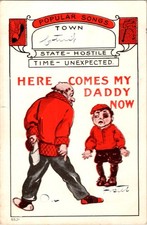
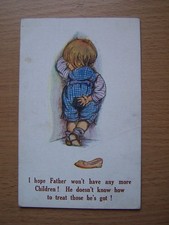
For children growing up during the 1940s, 1950s and 1960s, corporal punishment was a familiar feature of adult authority. The slipper, the cane and the occasional smack on the bottom were part of the disciplinary world many children knew, whether from personal experience, schoolroom stories or conversations overheard at home.
It is hardly surprising, therefore, that these things sometimes found their way into children’s games.
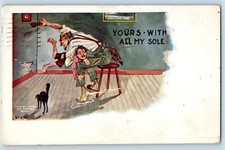
The slipper was particularly easy to imitate. Almost every household possessed an old carpet slipper, often with a worn fabric upper and a rubber sole. In children’s imaginations, such an ordinary domestic object could become the formidable instrument of a particularly strict schoolteacher.
The cane, too, had its place in make-believe, although the children generally substituted a garden twig or a piece of bamboo for the real article.
One little girl, remembering her childhood games, described how she always insisted upon playing the teacher. Her arithmetic questions were so difficult that nobody could reasonably have been expected to answer them. Incorrect answers brought a stern lecture, lines to write or the threat of six of the best.
Another remembered playing school with her cousins in a garage. The children arranged chairs in rows, used scraps of paper for exercise books and took turns at being the teacher. Their imaginary classroom had all the rules and regulations of a real school, including punishments for talking and misbehaviour.
Yet these recollections were not all equally innocent. Some games became rough, some children were frightened or hurt, and others found themselves following the instructions of older playmates.
Looking back, we can recognise both the extraordinary inventiveness of childhood and the way children sometimes copied adult behaviour without understanding its consequences.