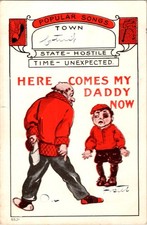
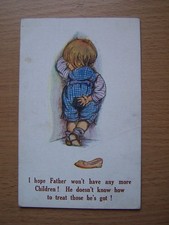
Of all the ordinary household objects that found their way into children’s games, few were more recognisable than the humble carpet slipper.
In the British home of the 1950s and 1960s, slippers were everywhere. Father’s old brown pair stood beside his armchair, Mother’s floral slippers waited beneath the bed, and Grandmother might possess a particularly substantial pair with thick rubber soles.
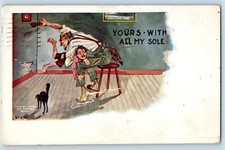
To the imaginative child playing schools, a slipper could become an important symbol of classroom authority.
A girl playing headmistress might place one upon her desk, just as she imagined a real headmistress might keep a cane in her cupboard. Its presence alone was sometimes sufficient to produce a great deal of giggling and exaggerated good behaviour.
The slipper was frequently mentioned in the childhood recollections upon which this article is based. Some children remembered it as an alternative to the cane, while others recalled imaginary school punishments in which the teacher announced that a naughty pupil would be receiving a smacked bottom.
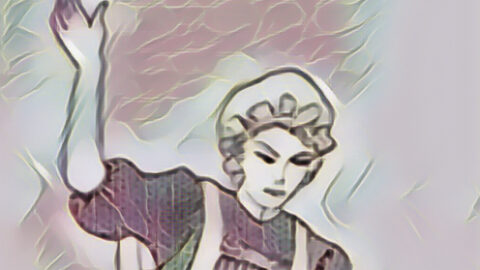
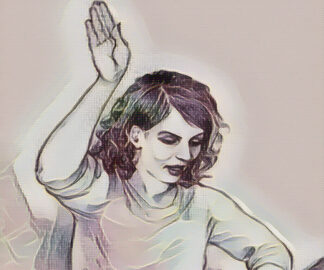
There was often considerable ceremony attached to these proceedings. The offender would be summoned before the teacher, accused of talking during lessons, failing arithmetic or breaking some invented classroom rule. A stern expression and a wagging finger completed the performance.
One can almost hear the little headmistress declaring, “I have warned you twice already, and I shall not warn you again!”
Such games reflected the language and customs children encountered in the adult world. School stories, family conversations and the disciplinary practices of the period provided plenty of material for imitation.
The slipper was particularly suited to theatrical make-believe because it was so ordinary. Unlike a real school cane, it required no special equipment. A child could borrow an old slipper from the hallway and immediately transform an otherwise unremarkable garden shed into the office of a fearsome headmistress.
There was, however, an important distinction between pretending to administer punishment and actually striking another child.
Some recollections describe little more than theatrical gestures and mock threats. Others describe genuine smacks, sometimes painful ones, administered by children who did not fully appreciate the possible consequences.
The same distinction applied to the cane. A twig could be used as a classroom prop, but using it to strike another child was a very different matter.
It would be misleading to suggest that every such game was harmless simply because the participants were young.
Nevertheless, the prominence of the slipper in these memories tells us something interesting about British childhood. An object associated with warmth, comfort and the domestic fireside could, through imagination and imitation, become an emblem of discipline.
And for the children who played at being teachers, the slipper was sometimes as essential to the performance as the register, the blackboard and the teacher’s most severe expression.