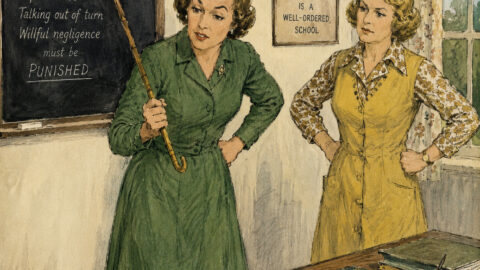
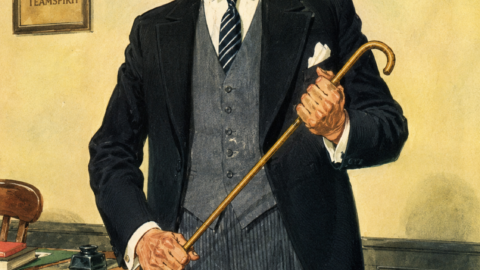
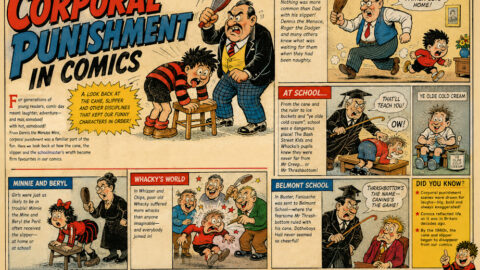
Boarding schools presented disciplinary circumstances quite different from those of ordinary day schools.
The pupil did not leave school at four o’clock and return to family life.
School authority continued into the evening and night.
Discipline Beyond Lessons
In a boarding school, rules governed dormitories, meals, preparation periods and leisure time as well as lessons.
The range of possible disciplinary offences was therefore much greater.
Talking after lights-out, making noise in dormitories or breaking house rules could bring punishment even though no classroom was involved.
The Housemaster
The housemaster occupied a particularly important position.
He combined some of the functions of teacher, disciplinarian and residential supervisor.
One respondent, aged fifteen in 1957, recalled being caned by his housemaster for talking after lights-out.
The punishment took place privately in the housemaster’s study.
Repeated Dormitory Offences
Unlike many respondents who described a punishment as effective, this contributor gave a clear negative answer.
He was punished again.
Indeed, he stated that he had been caned many times, principally for dormitory offences.
His evidence therefore provides a particularly strong example of repeated corporal punishment failing to eliminate a pattern of behaviour.
Why Dormitories Were Difficult
The dormitory presented obvious disciplinary difficulties.
Pupils were together without the constant formal supervision found in a classroom.
Conversation and joking after lights-out were predictable temptations.
A rule demanding complete silence might consequently be broken repeatedly.
The Limits of Deterrence
If a pupil repeatedly accepted punishment rather than remain silent after lights-out, the sanction was plainly failing to achieve permanent compliance.
This does not mean it had no immediate effect.
A punishment might restore quiet for that particular evening.
But the same problem could return later.
A Different School World
Boarding-school discipline therefore deserves separate consideration.
The school controlled far more of the pupil’s daily life.
As a result, corporal punishment could be applied to conduct which would have occurred entirely outside the authority of a day school.
The boarding pupil was not merely educated at school.
For much of the year, he lived there.