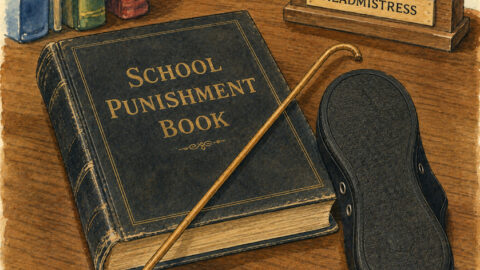
One of the clearest themes to emerge from these recollections was that schools differed not only in who received corporal punishment, but also in where it was carried out.
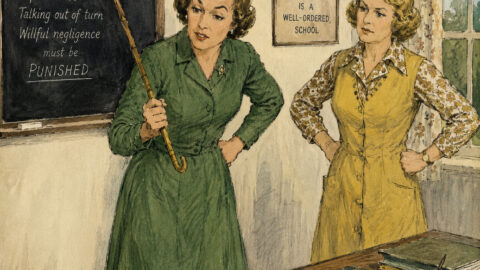
For some former pupils, punishment was something that happened in full view of the class. Everyone saw it, everyone knew why it had happened, and once it was over, the lesson simply continued.
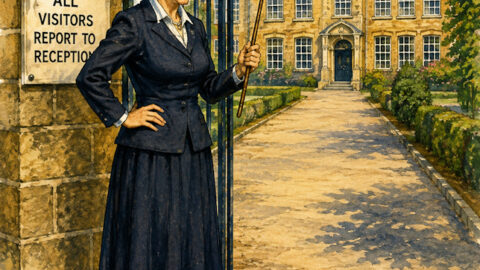
In other schools, physical punishment was regarded as a private matter. A child would quietly be sent to the headteacher or deputy head’s office, and whatever happened behind the closed door remained largely unknown to everyone else.
These two approaches created very different memories.
Several contributors remembered teachers who believed discipline should be visible. If a child talked during a lesson, ignored instructions or repeatedly disrupted the class, they might be called to the front. The punishment would be administered calmly before classmates, after which the pupil returned to their seat and lessons resumed as though nothing unusual had happened.
To those who experienced it, this was simply part of school life.
There was little drama.
The punishment itself often lasted only a few seconds, but the entire class witnessed the consequences of breaking the rules.
Other schools adopted a completely different philosophy.
Former pupils recalled that the cane was often reserved for the headteacher or deputy head and administered in private. One person remembered that girls at their school occasionally received the slipper in class, but if the cane was used, it took place behind closed doors, administered by the female deputy head. The privacy seemed deliberate, perhaps intended to spare pupils additional embarrassment while still maintaining authority.
Some memories suggest that the choice between public and private punishment depended upon the type of offence.
Minor classroom disruption might be dealt with immediately by the class teacher.
More serious matters, however, were often referred to senior staff, whose office carried an added sense of authority. Simply being sent there could be enough to make many pupils anxious before any punishment had even been decided.
Interestingly, several former pupils observed that they remembered the anticipation almost as clearly as the punishment itself.
Waiting outside the headteacher’s office…
Listening for footsteps…
Wondering how many strokes had been decided…
These moments often remained fixed in the memory for decades afterwards.
Yet not every recollection described fear.
Some contributors recalled teachers who administered punishment calmly and consistently, never appearing angry or vindictive. Once the matter had been dealt with, it was considered finished. There were no grudges, no lectures that continued for days, and no lasting consequences beyond the brief punishment itself. Several former pupils contrasted this with teachers whom they believed used punishment far too readily or for offences such as poor academic performance rather than deliberate misconduct.
The accounts also reveal another important difference between schools.
Some teachers believed that discipline worked best when everyone could see it.
Others believed that preserving a child’s dignity was equally important.
Neither approach was universal, and neither remained unchanged over time. Indeed, practices often differed between neighbouring schools, and sometimes even between teachers working in the same building.
Looking back today, these recollections remind us that corporal punishment was never governed by one simple set of unwritten rules.
Instead, every school developed its own traditions.
Some favoured public discipline as a visible lesson for the entire class.
Others preferred private correction, believing that authority could be maintained without an audience.
Together, these memories reveal just how varied the educational experience could be for children growing up during the decades when corporal punishment remained part of British school life.