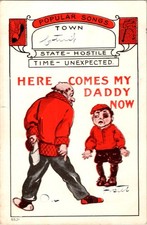
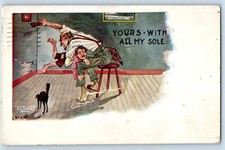
For many people who attended school during the years when corporal punishment was common, the memories are not limited to the punishments they personally received. Just as vivid are the memories of sitting quietly at a desk, watching classmates being disciplined in front of everyone else.
For some children, these moments were deeply upsetting. Others gradually became accustomed to them simply because they occurred so frequently. The emotional impact often depended upon who was being punished, how severe the punishment appeared, and the atmosphere created by the teacher.
One former pupil recalled attending a junior school where corporal punishment formed part of everyday classroom life. Between the ages of six and eleven, watching other children receive physical punishment caused genuine distress. That feeling was especially strong when the child being punished happened to be a close friend. Only those pupils who had earned a reputation for persistent bullying or serious misbehaviour attracted little sympathy from their classmates.
Two teachers, in particular, left lasting impressions.
The first was a senior female teacher who believed firmly in maintaining discipline through physical punishment. She had a commanding view of her own authority and frequently dealt with boys by delivering repeated slaps to the upper arm. The punishment could be surprisingly painful, and some boys quickly discovered that showing exaggerated discomfort often persuaded her to stop sooner than she had intended.
Girls were treated differently. They were usually punished by receiving slaps to the backs of their legs. Minor offences resulted in only a few strikes, but more serious misdemeanours often brought considerably longer punishments. These scenes unfolded openly within the classroom, making them visible to every child present.
Punishments occurred with remarkable regularity. Hardly a day seemed to pass without at least one boy being disciplined, while girls were punished rather less frequently, though still often enough for everyone to regard it as a normal part of school life.
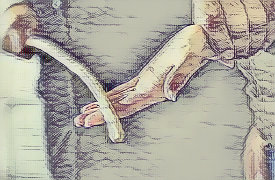
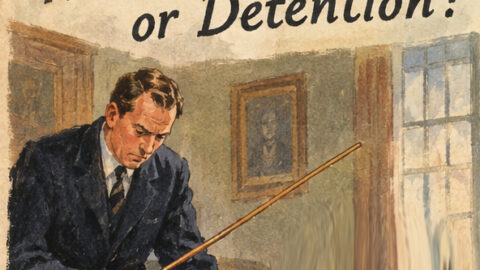
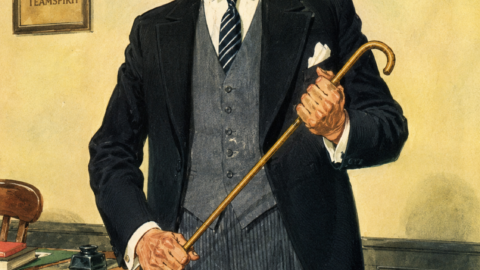
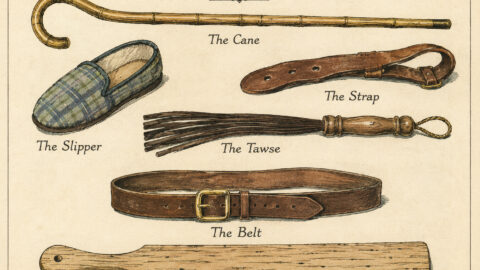
The male teacher employed different methods. While he occasionally used the cane, he was also known for administering physical punishments by hand. Most canings were carried out across the hands, although more serious offences sometimes resulted in strokes administered elsewhere. One particularly memorable occasion involved a girl receiving a punishment that many classmates felt was unnecessarily severe for the offence committed. The incident remained firmly fixed in the memory of one witness, who never forgot seeing someone he admired being punished so publicly.
Although the teacher was respected for his ability in the classroom and for helping many pupils successfully prepare for important examinations, some former pupils later questioned whether his methods always matched the seriousness of the offences involved.
For certain children, these experiences created considerable anxiety about moving on to secondary school, particularly schools already known for their strict disciplinary traditions.