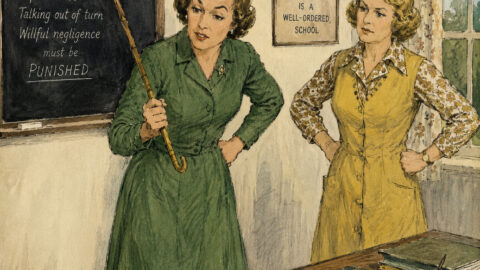
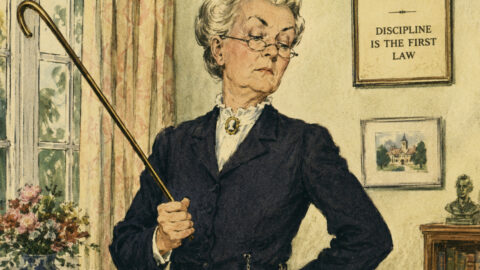
Father Christopher Nulty, S.J., who later served as Rector, was remembered as a serious and austere figure. He believed firmly in the association between discipline and learning, favouring stern correction over encouragement in guiding his pupils through their studies.
Father Philip Gleeson, S.J., who served for thirteen years as Prefect of Studies before becoming Rector, was described as administering his office with dignity and restraint. Though corporal punishment formed part of the disciplinary structure of the school, it was generally regarded as moderate and carefully regulated.
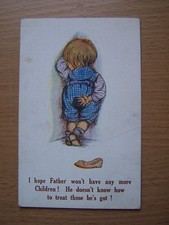
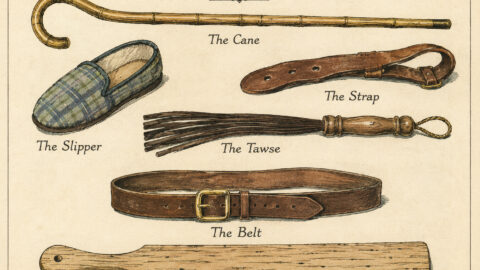
Discipline at Xavier was less notable for overt severity than for its constant and pervasive presence throughout school life. Nevertheless, corporal punishment remained an accepted element of that system. The “strap” — a sewn leather implement approximately two feet in length and two inches in width — was the customary instrument employed. Around it grew a considerable body of folklore among the boys: stories circulated of straps weighted with metal, soaked in brine, or fashioned to maximise their severity.
The presence of such punishment created a curious familiarity between masters and pupils. Those instructors who used the strap most frequently often referred to it with a degree of grim humour. Some carried it concealed beneath their gowns, others among their exercise books, and a few displayed it openly in the schoolyard. Although Jesuit regulations specified which officials were authorised to administer corporal punishment, in practice its use varied according to the inclination of individual priests. Lay teachers were expressly forbidden from employing it, a restriction which may have weakened their authority in the classroom.
Discipline among pupils was often direct and conspicuous. Yet many laymasters commanded respect through other means. Mr. Ludwig Van Baer, remembered for his stern bearing and sharp rebukes, could silence disorder with a glance or a cutting remark. Mr. Joe O’Dwyer possessed a wit capable of humiliating even the most unruly student. When a boy was referred to the Minister or the Prefect of Studies for punishment, it was generally understood that the offence was considered particularly grave.
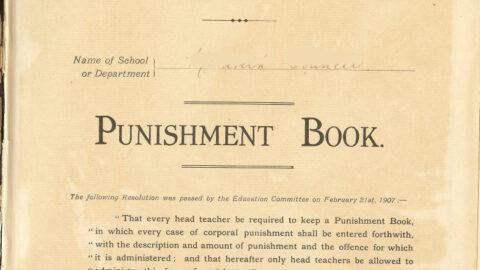
School records and recollections from former students suggest that corporal punishment at Xavier was not administered excessively. One exception was Burke Hall, where younger boys were educated. Some members of the Jesuit staff appeared less adept at managing small boys and resorted to physical punishment with greater frequency. Over the years, the governing authorities repeatedly issued regulations concerning the treatment of pupils. These rules, largely unchanged between 1898 and 1935, included the following provisions:
A master or Prefect might order up to six strokes of punishment for sufficient cause; in exceptional circumstances the Prefect of Studies could order nine.
No boy was to receive more than six strokes in a single day, or more than nine when ordered by the Prefect of Studies.
Striking a boy anywhere other than the hands with a cane or strap was strictly forbidden without the explicit consent of the Rector.
Striking a pupil with the hand was absolutely prohibited.
The Rector determined whether punishment should be administered by the master himself or by another appointed official.
No master or Prefect was to impose multiple penalties simultaneously without permission from the Prefect of Studies.
Boys were not to be referred to the Prefect of Studies for trivial offences.
Punishment was almost invariably public in character. Even when administered privately, the consequences were visible to fellow pupils. In the classroom, the boy receiving punishment stood before his peers with hand outstretched, observed by classmates who were at once sympathetic and unsparing. The accepted response was one of stoic endurance: to withstand the blows without flinching or complaint.
Those unable to maintain such composure might conceal their injured hands beneath their arms or bow silently over them. Any obvious display of fear or withdrawal invited ridicule. Protests against perceived injustice were rare, though excessive force or an errant blow that raised a welt could provoke comment among the boys. The familiar refrain that punishment caused greater distress to the punisher than to the punished was frequently repeated, and some believed it to contain a measure of truth.
The cultural life of the school offered occasional contrast to this atmosphere of discipline. Father Montague’s operatic productions provided brief intervals in which artistic pursuits flourished. Yet, as one observer remarked, the boys’ characters were more often shaped by rigorous discipline than by a lasting appreciation of music and the arts.
The boy prefects occupied a privileged position within the school hierarchy. Exempt from corporal punishment, they enjoyed a number of distinctions and freedoms denied to ordinary pupils. They entered the study hall after interviewing offenders, could communicate sparingly during study periods, and were granted greater liberty of movement within the school.
Such privileges were regarded as natural and proper within the institutional order of the time. Yet they also served to reinforce the structures of authority and status upon which the school depended. Discipline carried with it an element of public humiliation, and prefects, as representatives of authority, were shielded from such indignity.
Scotch College, Melbourne, has likewise been the subject of several historical works. The most recent of these, A Deepening Roar: Scotch College, Melbourne, 1851–2001 by James Mitchell, provides a detailed account of that institution’s traditions and development. The school, situated near Xavier along Melbourne’s Glenferrie Road, maintained a long-standing rivalry with Xavier, as well as with Melbourne Grammar School. These rivalries formed a notable part of Melbourne’s private school culture during much of the twentieth century.