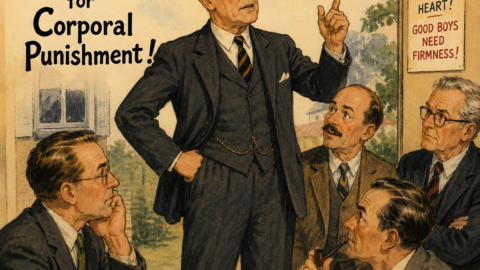
The abolition of corporal punishment in schools was driven by a growing recognition that discipline should be lawful, fair, and respectful of children’s rights. Rather than relying on physical punishment, modern education increasingly emphasises positive behaviour management, consistency, and accountability.
One concern raised by critics of school discipline is that some schools have failed to apply their rules fairly. For example, pupils have been excluded for issues such as haircuts, while investigations have found that certain school policies disproportionately affect boys and students from particular ethnic backgrounds. Such findings have raised questions about equality, discrimination, and the consistent application of school rules.
If schools or school leaders fail to comply with the law, the appropriate response is to hold those responsible accountable through legal or disciplinary measures. Allowing unlawful practices, including the use of excessive or illegal punishments, undermines confidence in the education system. Schools are expected to model respect for the law and for the rights of the pupils in their care.
Supporters of corporal punishment have often argued that it was an effective way to maintain order in the classroom. However, critics question whether inflicting severe physical pain provides any genuine educational benefit. While it may produce short-term obedience through fear, it does little to encourage independent thinking, mutual respect, or self-discipline—qualities that education is intended to develop.
Views on discipline have changed considerably over time. In the past, many teachers relied on physical punishment as a routine method of controlling behaviour. Today, educational practice is based on the principle that discipline should be proportionate, consistent, and applied equally to all pupils regardless of sex or background. Any disciplinary system perceived as targeting one group more than another is likely to be viewed as unfair and ineffective.
Historical examples also demonstrate that corporal punishment could be abused. In some cases, excessive force resulted in serious injuries, reinforcing concerns that physical punishment carries significant risks. Critics argued that once physical punishment became an accepted disciplinary tool, the line between reasonable discipline and abuse could easily be crossed.
Changing attitudes towards children’s welfare, together with developments in human rights and education policy, ultimately led to the end of corporal punishment in schools. In Victoria, Australia, corporal punishment was prohibited in government schools in 1985 and later banned in non-government schools in 2006 through the Education and Training Reform legislation. Similar reforms occurred in many other jurisdictions as educational authorities concluded that physical punishment was incompatible with modern standards of child protection, equality, and effective teaching.
The abolition of corporal punishment reflects a broader shift towards disciplinary approaches that promote respect, accountability, and the wellbeing of all pupils while ensuring that schools operate within the law.