A responsible survey must consider not only its evidence but its absences.
There are several important limitations.
Pupils Who Were Never Punished
People who experienced corporal punishment naturally have more to contribute to a survey about it.
Those who passed through school without ever receiving such punishment are less visible.
Yet they are essential to understanding deterrence.
The threat may have worked precisely because they never tested it.
The Teacher’s Account
Most of the evidence considered here comes from former pupils.
We rarely possess the teacher’s version of the same incident.
A pupil might remember a punishment for “talking.”
The teacher might have remembered weeks of persistent disruption.
Without both accounts, certainty is impossible.
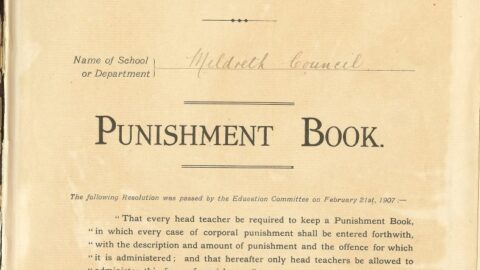
The Punishment Book
Official records provide another viewpoint but are incomplete.
They generally concentrate upon formal punishments.
Routine classroom discipline could go unrecorded.
Thus the historian faces an unusual problem.
The most formally documented punishments may not have been the most frequent.
Memory
Recollection itself changes.
Dates become approximate.
Numbers may be uncertain.
Several similar incidents can merge together.
Exceptional events are remembered more clearly than ordinary ones.
This does not make personal testimony worthless.
It means that it must be handled carefully.
Selection
The survey is not a random sample of every British schoolchild.
It cannot therefore tell us that a precise percentage of pupils were caned, slippered or strapped.
Nor can it reliably calculate national rates of effectiveness.
What It Can Do
What the evidence does exceptionally well is reveal variety.
It tells us what could happen.
It demonstrates how different schools organised discipline.
It records how former pupils interpreted their experiences.
That is a considerable historical value, provided we do not ask the material to prove more than it can.