The systems of school discipline that existed in Scotland and England during the mid-twentieth century reflected two distinctly different educational cultures. While both relied on corporal punishment as a recognised means of maintaining order, the methods employed, the teachers who administered them, and the attitudes surrounding their use varied considerably. These differences shaped the daily experiences of pupils and influenced how authority was perceived within schools.
One notable distinction concerned the type of punishment considered acceptable. In Scottish educational circles, there was a widespread belief that striking a pupil on the buttocks, even when covered by ordinary outdoor clothing, was inappropriate and undignified. Many educators regarded it as embarrassing for both teacher and pupil, particularly in mixed schools where boys and girls were taught together. As a result, corporal punishment directed at the clothed buttocks was officially prohibited in Scotland during the late 1950s. Thereafter, the only authorised form of corporal punishment in state schools was the use of the leather tawse on the palms of the hands.
Supporters of the Scottish system argued that it was both structured and effective. Punishments were expected to be proportionate to the offence, with teachers exercising discretion according to the seriousness of the misconduct. The class teacher occupied a respected—and sometimes feared—position of authority, not only in matters of teaching but also in maintaining discipline. Pupils generally understood that misbehaviour could result in an immediate and painful consequence, reinforcing the expectation that classroom rules would be obeyed.
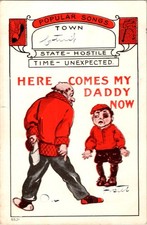
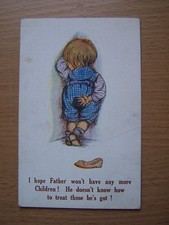
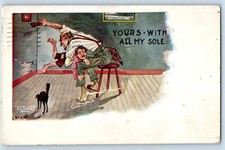
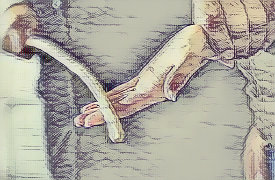
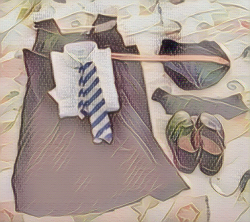
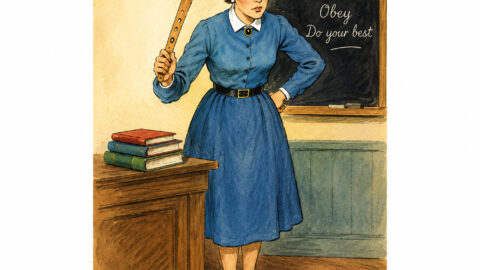
In England, however, the situation was often rather different. While the cane remained the most severe and prestigious instrument of corporal punishment in many secondary schools, it was commonly reserved for serious offences and administered only by the headteacher, deputy head, or a limited number of senior staff. Everyday disciplinary matters were more frequently dealt with by ordinary classroom teachers using a gym shoe or slipper, typically delivered across the seat of the trousers. In some schools, a ruler, length of wood, or other improvised implement might occasionally be used, although such practices depended largely on individual teachers rather than official policy.
This raises an interesting question about the comparative effectiveness of the two systems. Because the English slipper was often regarded as less severe than the Scottish tawse, some have wondered whether pupils viewed it with less apprehension. Did the slipper always inflict enough pain to act as a genuine deterrent, or did some pupils treat the experience almost as a badge of honour, particularly when being punished in front of classmates? Unlike the tawse, which delivered a sharp, lingering sting to the hands and was widely feared, the slipper’s impact varied considerably depending on the teacher’s strength, the type of footwear used, and the number of strokes administered.
Experiences differed widely between schools. One former grammar school pupil recalled beginning secondary education in 1963, when Saturday morning detention remained part of school life. Attendance was compulsory, full school uniform had to be worn, and the loss of a weekend morning was regarded by most pupils as a significant punishment in itself.
Corporal punishment was also relatively common during the early years at his school. When he first arrived, around 20 per cent of the teaching staff were male and 80 per cent female, yet only a small group of approximately six male teachers regularly administered the slipper. Over the following seven years, attitudes gradually changed, and by the time he left in 1970 none of these teachers continued to use it routinely. The implements varied. Most favoured large, firm-soled gym shoes, while the woodwork teacher occasionally preferred a wooden offcut or a heavy ruler. On one memorable occasion, a blow delivered with a piece of wood was so forceful that the wood itself snapped, illustrating both the teacher’s temper and the unpredictability of discipline in some classrooms.
Despite these experiences, the pupil admitted that corporal punishment itself did little to discourage further misbehaviour. Detention, by contrast, proved far more inconvenient. During the early years it occupied valuable Saturday mornings, making it particularly unpopular. Later, the school replaced Saturday detention with Tuesday and Thursday evening sessions, each serving a different purpose.
Tuesday evenings were designated as Returned Work Detention, intended for pupils who had failed to complete homework satisfactorily, submitted poor-quality work, or had copied another pupil’s assignment. Ironically, one pupil recalled choosing to copy from a classmate who had produced equally incorrect mathematics answers, resulting in both receiving detention.
Thursday evenings were reserved for punitive detention, imposed for general misconduct rather than academic failings. Tasks were deliberately tedious and designed to reinforce discipline rather than provide educational benefit. Pupils might spend an hour polishing brass door handles, cleaning classroom furniture, tidying cupboards, or carrying out other routine maintenance under staff supervision. Although physically undemanding, these duties were monotonous and served as a visible reminder of the consequences of breaking school rules.
Only the most serious offences resulted in referral to the headteacher. Smoking on school premises, persistent defiance, fighting, vandalism, or repeated breaches of discipline could lead to a formal appearance before the head, where the cane rather than the slipper might be used. For many pupils, the prospect of such a meeting carried as much psychological weight as the punishment itself, since it signified that ordinary classroom discipline had failed.
The Scottish approach placed rather more responsibility in the hands of individual class teachers. A form teacher could usually deal with a broad range of disciplinary matters, including offences committed in lessons taught by colleagues. The tawse was therefore not confined solely to punishing misconduct witnessed personally by the teacher administering it. Instead, it formed part of a wider disciplinary framework in which teachers collectively upheld school standards and supported one another’s authority. This collective responsibility helped create a consistent system in which pupils understood that misconduct in any classroom could carry immediate consequences.
Looking back, both systems reflected the educational philosophy of their time. Scottish schools tended to favour a single, tightly regulated method of corporal punishment administered by classroom teachers, while English schools generally combined a variety of lesser punishments with the occasional use of the cane for more serious offences. Whether one approach proved more effective than the other remains open to debate, but both illustrate how discipline was regarded as an integral part of school life during the 1950s, 1960s, and into the early 1970s. Today, these practices belong to history, yet they continue to provide valuable insight into changing attitudes towards education, authority, and the welfare of children.