One of the most revealing features of the survey is the enormous range of offences for which corporal punishment was employed.
Modern discussion sometimes creates the impression that the cane was reserved entirely for grave misconduct. The evidence of former pupils suggests a more complicated picture.
Certainly, serious offences could result in corporal punishment. Fighting, smoking, persistent defiance, stealing, bullying and deliberate disobedience were all offences for which pupils might find themselves sent to the headmaster.
Yet physical punishment was also used for conduct which might be regarded as comparatively minor.
Talking in class was a frequent example.
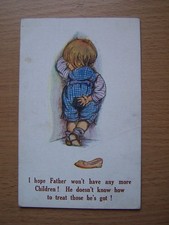
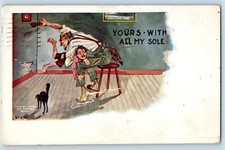
A pupil who continued talking after being warned might be called to the front and given the slipper. The punishment was immediate, public and unmistakable. There was rarely any lengthy disciplinary procedure.
Poor work could also result in physical punishment.
One contributor, recalling school in 1959, described receiving four strokes of the cane from a male teacher because of the standard of his work. The punishment took place in an empty classroom and was administered over his trousers.
He later considered it effective because he took greater care over his work for the remainder of the year.
This illustrates one of the fundamental assumptions behind traditional school discipline: punishment was intended not merely as retribution but as correction.
The object was to associate misconduct—or, in some schools, inadequate effort—with an unpleasant consequence sufficiently memorable to prevent repetition.
Repeated Warnings
Several accounts suggest that corporal punishment sometimes represented the final stage of a disciplinary process.
A pupil might first receive a warning. A second offence could bring detention. Continued misconduct might eventually lead to corporal punishment.
This distinction is important.
A caning administered after repeated warnings would probably have been regarded differently by teachers and pupils from an immediate slippering for talking in class.
Some former pupils consequently describe their punishment as fair even when admitting that it was painful.
Others strongly disagree.
The survey reveals no universal attitude among those who experienced corporal punishment.
The Question of Fairness
Whether a punishment was regarded as fair depended heavily upon whether the pupil accepted responsibility for the offence.
A pupil caught knowingly breaking a clearly understood rule might reluctantly concede that punishment was inevitable.
A pupil who believed himself wrongly accused remembered the matter very differently.
Group punishment was particularly capable of producing resentment.
When several pupils were involved in an incident, teachers were not always able to establish the precise responsibility of each child. Punishing everybody involved provided a simple solution, but not necessarily a just one.
The disciplinary system therefore depended greatly upon the judgement of individual teachers.
Choice of Punishment
Some schools occasionally permitted pupils to choose between corporal punishment and another penalty, usually detention.
To an adult reader this may appear an extraordinary arrangement, but to schoolchildren the choice could be perfectly rational.
A detention might consume an hour or more and interfere with games, clubs, the journey home or other plans. A single stroke of the cane, although painful, could be completed in seconds.
Accounts survive of boys discussing precisely this calculation.
The important point is not whether their choice was wise. It is that corporal punishment existed within a larger disciplinary system. Pupils understood the relative seriousness and inconvenience of different penalties and sometimes made deliberate choices between them.
The cane was therefore not simply an instrument.
It occupied a recognised position within the economy of school discipline, somewhere above ordinary classroom punishments and usually below suspension or expulsion.
To understand its use, one must understand that hierarchy.