There is something irresistible about asking whether the schools of yesterday really were better than the schools of today.
It is a question that has occupied parents, teachers and educationalists for generations. Were children better behaved when classrooms were stricter? Did they learn more when lessons concentrated upon facts, examinations and competition? Or do we merely remember the schools of the past through the comfortable haze of nostalgia?
Channel 4’s That’ll Teach ’Em attempted to explore precisely these questions by conducting a most unusual educational experiment.
A group of modern British teenagers was removed from the familiar surroundings of contemporary education and placed in a recreation of a school from approximately half a century earlier. Modern conveniences disappeared. Expectations changed overnight. Discipline became formal, uniforms traditional and lessons considerably less relaxed.
The third series concentrated upon another once-familiar feature of British education: the separation of boys and girls.
The fictional establishment was Charles Darwin Grammar School, presented very much in the manner of a selective grammar school of the 1950s, with particular emphasis upon science.
Its motto was uncompromising:
Solum supersunt fortissimi — only the fittest survive.
Competition was not something to be discouraged. It was positively celebrated.
Thirty pupils, all accustomed to mixed education, suddenly found themselves attending separate classes. They were also subjected to rules which would have appeared perfectly ordinary to many pupils of the post-war period but decidedly peculiar to teenagers of the modern age.
Boys and girls were expected to remain apart. Jewellery and make-up disappeared. Dormitories were basic. Uniform regulations were strict.
Even relatively trivial comforts were restricted.
Chocolate, deodorant, make-up and mobile telephones became contraband.
Naturally, some pupils immediately attempted to conceal them.
This was perhaps one of the programme’s most revealing features. Although the surroundings were supposedly those of the 1950s, the pupils remained unmistakably modern teenagers.
One girl attempted to retain her mascara and was promptly instructed to remove it. A boy concealed chocolate beneath his bed and earned detention when it was discovered.
Neither offence was particularly serious. Indeed, such testing of boundaries is probably as old as schooling itself.
What had changed was the environment surrounding it.
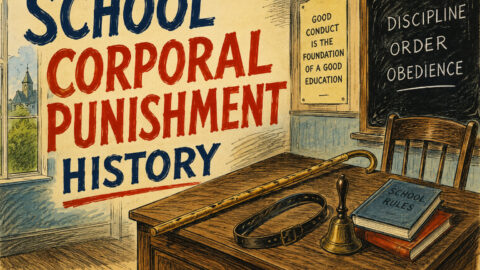
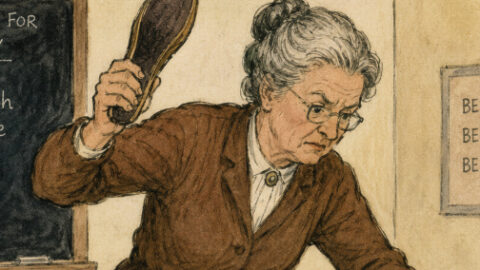
The programme could not reproduce every aspect of a genuine 1950s school. Corporal punishment, for example, belonged to the historical setting being recreated but could obviously not form part of the modern television experiment.
Instead, discipline depended upon detention, loss of privileges, stern reprimands and the formidable authority of the staff.
Yet the real question was not whether the programme could reproduce every detail of the past.
It was whether modern pupils, suddenly confronted with the expectations of another educational age, would adapt.
And almost immediately it became apparent that this was going to be considerably more complicated than simply putting children into old-fashioned uniforms.